Slab Leak Warning Clues for Grand Forks ND Basements
Grand Forks sits on a floodplain carved by the Red River, and the soil conditions here are unlike most places in the country. The expansive clay that underlies much of the city shifts, contracts, and swells with every freeze-thaw cycle, putting constant stress on the concrete slabs and the copper or PEX supply lines buried beneath them. When that stress eventually causes a pipe to crack or separate, the water doesn't announce itself with a dramatic burst. It seeps. It spreads. And by the time most homeowners notice anything wrong, the damage is already significant.
What a Slab Leak Actually Is
A slab leak occurs when a water supply line or drain line running beneath a concrete foundation develops a crack, pinhole, or joint failure. In Grand Forks ND homes, the most common culprits are copper pipes that have corroded from the outside due to mineral-rich soil contact, or plastic lines that have shifted under frost heave pressure. Unlike a pipe failure inside a wall, a slab leak is hidden under several inches of concrete, making it impossible to see and difficult to hear until conditions have worsened considerably.
The water released by a slab leak doesn't just sit under the slab. It travels along the path of least resistance, sometimes rising through cracks in the concrete floor, sometimes migrating laterally toward the foundation wall, and sometimes soaking into the subgrade until moisture readings inside the basement become noticeably elevated. Understanding the early warning signs gives you a window to act before structural damage or mold growth sets in.
Early Warning Signs Specific to Grand Forks Homes
Because North Dakota winters are extreme and summer temperatures can also be significant, the signs of a slab leak in this region sometimes get misattributed to seasonal changes. Knowing what to look for — and what to rule out — matters here more than in milder climates.
- Warm or hot spots on basement floors: If you notice areas of your concrete floor that feel noticeably warmer than the surrounding surface, this often indicates a hot water line has failed beneath that point. The heat conducts upward through the slab.
- Unexplained sound of running water: When all fixtures in your home are off and you can still hear a faint rushing or hissing sound, especially near the basement floor level, that acoustic clue is among the clearest early indicators of a pressurized line failure.
- Sudden increases in your water bill: Grand Forks Utility Billing data shows that unexplained usage spikes of 15 to 30 percent month-over-month often trace back to leaks, and slab leaks are a leading source because the water never reaches a drain — it just accumulates in the ground.
- Damp or musty basement air: The Red River Valley's humidity already makes basements prone to moisture issues, but a persistent musty odor that returns quickly after dehumidifying can signal water migrating up from beneath the slab rather than entering from outside.
- Cracks forming in the basement floor slab: While some cracking is normal in aging concrete, new cracks or cracks that are widening over a short period deserve investigation. Saturated soil beneath the slab can cause differential settling that shows up as surface cracking.
- Low water pressure at fixtures: A pressurized line that is actively losing water underground will reduce the pressure available at taps and showerheads. If pressure has dropped without an obvious explanation, the loss may be occurring below the foundation.
Why Grand Forks Soil Conditions Accelerate the Problem
The expansive clay soils common throughout the Red River Valley are a significant contributing factor to pipe stress in this region. During spring thaw — which in Grand Forks can be prolonged and accompanied by genuine flood risk — the ground absorbs enormous quantities of water, expanding and shifting the soil profile around and beneath foundations. This movement puts lateral and vertical stress on buried pipes that were installed to be stationary. Over years, that repeated movement causes fittings to loosen and pipe walls to fatigue.
Older homes in neighborhoods like Lincoln Park, Near Southside, and the Riverside area near the Red River sit on foundations that have experienced decades of this seasonal stress. If your home was built before 1980 and has not had its underground plumbing inspected, you are operating on infrastructure that was never designed to accommodate the movement cycles that climate data from the last several decades documents.
For anyone researching Leak Detection options, the key point is that modern electronic and thermal detection methods allow professionals to pinpoint a slab leak location without any excavation, which matters enormously when the alternative is breaking up a finished basement floor on a guess.
The Risk of Delayed Action
Homeowners in Grand Forks sometimes delay calling a professional because the visible symptoms seem minor. A warm patch on the floor doesn't feel like an emergency. A slightly elevated water bill gets attributed to a running toilet. But slab leaks that go unaddressed follow a predictable escalation path.
In the first stage, water saturates the subgrade beneath the slab. In the second stage, that saturated soil begins to erode or expand unevenly, causing foundation movement. In the third stage, the structural integrity of the slab itself is compromised, and mold begins colonizing the moisture-laden environment. What began as a relatively straightforward pipe repair becomes a foundation remediation project with mold abatement components.
The cost differential between catching a slab leak early and addressing it after foundation movement has begun is substantial. Detection and repair of an isolated pipe failure typically costs a fraction of what foundation stabilization requires. That arithmetic alone justifies having a professional assessment performed whenever two or more of the warning signs above are present simultaneously.
What Professional Detection Involves
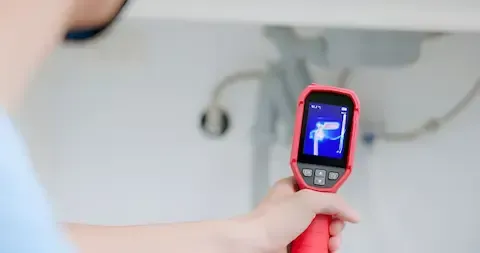
Thermal imaging, electronic listening devices, and pressure testing are the primary tools used to locate slab leaks without destructive exploration. Thermal imaging identifies temperature anomalies in the slab surface that correspond to hot water line failures. Electronic listening devices amplify the acoustic signature of water escaping under pressure. Pressure isolation testing confirms which branch of the supply system is losing pressure.
Once a location is confirmed, a licensed plumber can determine the best repair method — which may involve targeted slab penetration directly over the leak, rerouting the affected line through a wall cavity, or, in cases of widespread pipe degradation, repiping the entire supply system above the slab level. For background on how undetected water issues create compounding structural and health problems, the article on Leak Detection Hidden Water Damage covers that progression in detail.
Taking the Right First Step
If you have noticed any combination of the warning signs described here — warm floor areas, unexplained water sounds, rising utility bills, or new floor cracks — the appropriate response is to schedule a professional leak detection assessment rather than wait for more definitive evidence. In a climate as demanding as Grand Forks, where soil movement and freeze-thaw cycles are annual realities, slab leaks are not rare events. They are a predictable maintenance concern for any home with underground supply lines and a concrete foundation. Acting on early evidence is how you keep a manageable repair from becoming a structural project.
