Warning Signs of Frozen Pipes in Grand Forks Homes
Frozen pipes in Grand Forks homes show several clear warning signs before they burst. The most common indicators include a sudden drop to a faint trickle or no water at all from a faucet, visible frost on exposed pipes in crawl spaces or basements, and an unusual sewage-like smell caused by a blocked or frozen drain vent. You may also hear banging or cracking sounds inside your walls when temperatures drop. In Grand Forks, where winter temperatures regularly fall below zero, catching these signs early can mean the difference between a quick thaw and a flooded home.
What Does a Faint Trickle or No Water Mean?
When you turn on a faucet and only a thin trickle comes out — or nothing at all — that is one of the most reliable signs of a frozen pipe. Ice forming inside the pipe restricts flow or blocks it entirely. This happens most often at pipes running along exterior walls, in unheated crawl spaces, or through attached garages. In Grand Forks winters, exterior wall pipes are especially vulnerable because North Dakota cold penetrates poorly insulated wall cavities fast. If one faucet stops working but others are fine, the freeze is likely localized. If several fixtures lose pressure at once, the blockage may be on a main supply line.
Can You See Frost or Ice on Exposed Pipes?
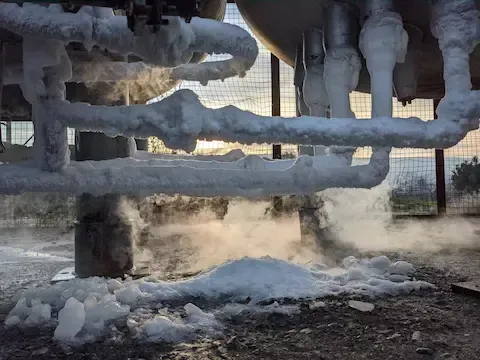
Yes, and visible frost is one of the easiest warning signs to confirm without any tools. If you have exposed pipes in your basement, utility room, or crawl space and you can see condensation, frost, or ice forming on the outside of the pipe itself, the interior is almost certainly frozen or well on its way. Run your hand carefully along accessible pipes during or after a deep cold snap. A pipe that feels unusually cold to the touch compared to other pipes nearby is a red flag. Grand Forks homes built before modern insulation standards are particularly prone to this in basements where the rim joist area is under-insulated.
Why Would a Frozen Pipe Cause an Odd Smell?
A frozen drain or sewer vent pipe can trap gases that would normally escape outdoors. When that vent ices over, sewage odors back up into the home through drain openings. This smell — often described as a rotten egg or strong sewage odor — is a sign that the freeze is affecting your drain system rather than your supply lines. It is worth taking seriously because it can also indicate a full blockage that may lead to sewage backing up in your fixtures. If you notice this smell combined with slow drains during a cold stretch in Grand Forks, a frozen vent is the most likely cause.
Do Strange Sounds Indicate a Frozen Pipe?
Banging, cracking, or bubbling sounds coming from inside walls or ceilings during a cold snap can signal pipe trouble. As water freezes, it expands and creates pressure against the pipe walls. This can produce audible sounds, especially in older plumbing. A sudden bang followed by the sound of water running inside a wall is an emergency — that often means a pipe has already burst. If you hear these sounds before any visible water damage, shut off your main water supply immediately and call for Frozen Pipe Repair before the situation worsens.
Are Certain Spots in Grand Forks Homes at Higher Risk?
Yes. Grand Forks has a specific set of housing conditions that create predictable freeze points. Homes in older neighborhoods near downtown, including areas around South Washington Street and University Avenue, often have original plumbing running through uninsulated exterior walls. Properties with attached garages frequently see supply lines freeze where they pass through the garage wall. Homes with crawl spaces — common in many Grand Forks subdivisions — are also high-risk because cold air circulates freely underneath. Pipes in kitchen cabinets on exterior walls, especially in homes where cabinet doors are kept shut in winter, lose the warmth from interior air and freeze faster than homeowners expect.
What Should You Do the Moment You Spot a Warning Sign?
Act quickly and methodically. First, open the faucet connected to the suspected frozen pipe — leaving it slightly open releases pressure as the ice thaws. Second, locate your main water shutoff so you can cut supply immediately if the pipe bursts. Third, apply gentle warmth to accessible frozen sections using a hair dryer or heating pad — never an open flame. Do not try to force a thaw on a pipe you cannot see or reach. For pipes inside walls or in tight crawl spaces, call a professional. You can also review Thawing Frozen Pipes Safely During Winter for a step-by-step guide on safe thawing methods before help arrives.
How Cold Does It Need to Be for Pipes to Freeze in Grand Forks?
Pipes typically begin to freeze when outdoor temperatures drop to 20°F or below, but Grand Forks regularly sees temperatures well into the negative teens and colder throughout January and February. Wind chill accelerates the process significantly because it strips heat from pipe surfaces faster. Pipes in unheated spaces can freeze even when interior temperatures are normal if outside air is infiltrating the space. A single overnight low of minus 15°F — a common Grand Forks winter reading — is more than enough to freeze an exposed or poorly insulated pipe within hours.
